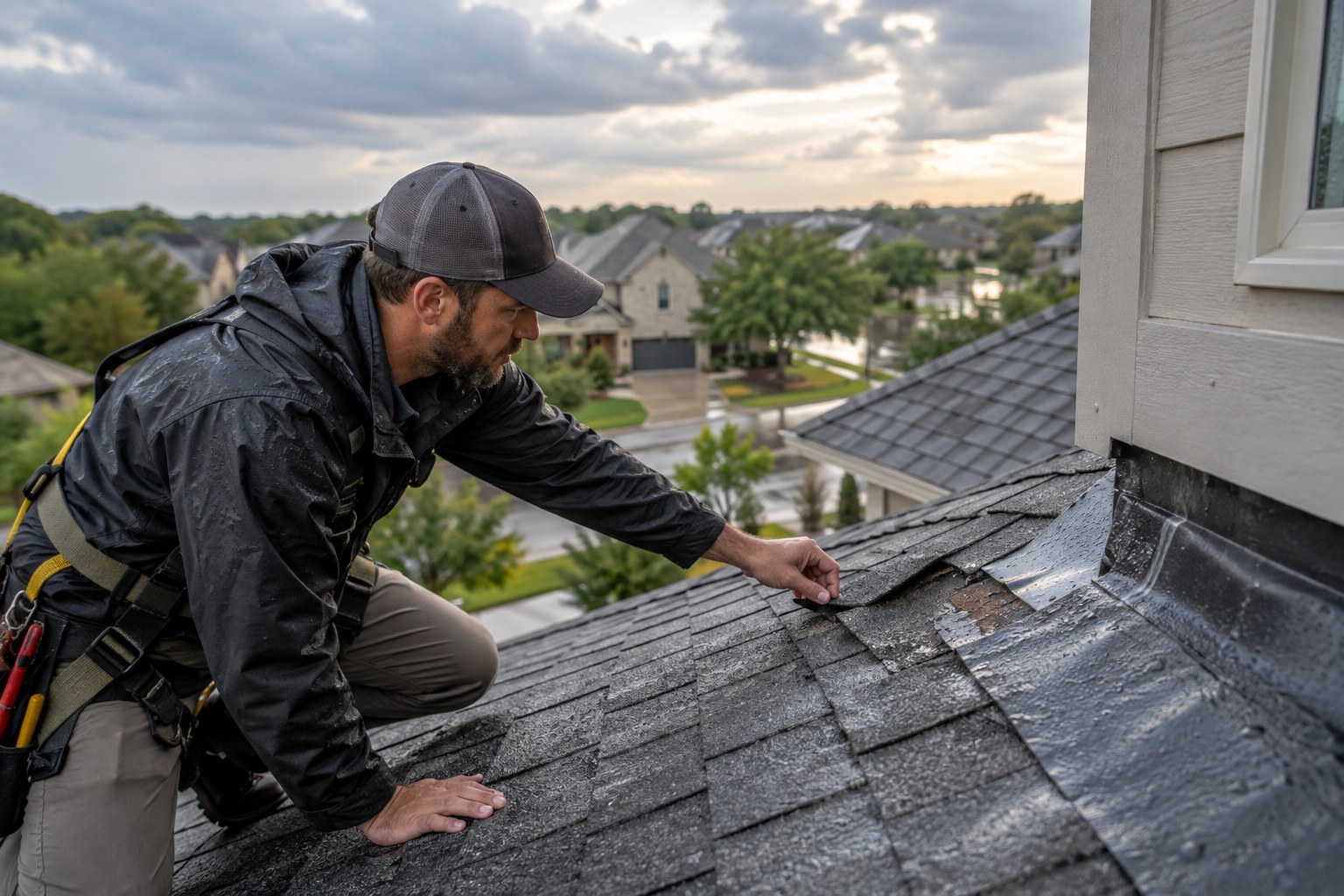
Scope of workComplex does not mean unrepairable
It is easy to assume that a roof with this much going on has to be dealt with wholesale. Usually it does not. The defects that cause leaks on complex historic roofs tend to be specific and local: one valley that has corroded or been packed too long, one dormer with displaced step flashing, one chimney missing its cricket, one section of built-in gutter whose lining has failed.
What the condition of the surrounding roof determines is whether repairing that defect is worthwhile. If the covering around it is serviceable and the decking is sound, a targeted repair is the proportionate answer. If the roofing is brittle across several slopes, if multiple junctions are failing simultaneously, or if moisture has already moved through the decking over a wide area, the calculation changes.
That decision should come from what is found on the roof rather than from its age. Plenty of century-old roofs in Palestine have serviceable coverings and one bad detail.
On historic fabric: Water reaching a masonry wall or original timber does more damage than the ceiling stain suggests, which is why establishing the wet extent matters as much as stopping the entry.