
Exposed-fastener metal
Common and the most vulnerable, because every fastener head sits in the salt stream and every hole breaks the coating.
Port Isabel sits at the entrance to the Laguna Madre near the southern tip of Texas, with the Queen Isabella Causeway running across the water to South Padre Island. It is a working port with a long shrimping history.
Being this close to salt water changes roofing in a specific way: the air itself is corrosive, and it works on the roof every single day rather than during storms.
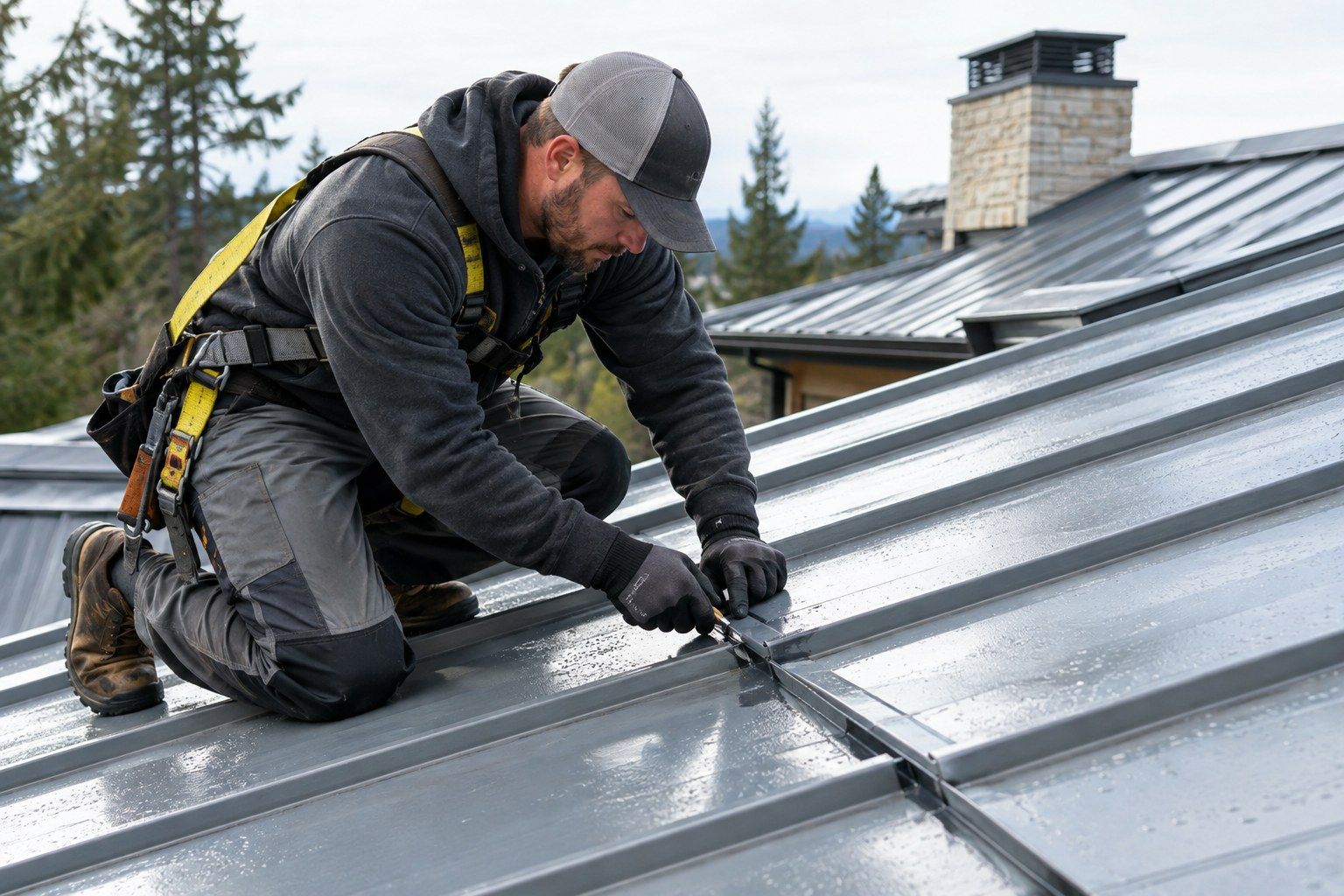
Inland, a roof deteriorates in steps when something happens to it. Here it deteriorates continuously. Inspection intervals need to reflect that rather than waiting for a storm.
Most roofing problems are event-driven. A storm passes, hail falls, a freeze arrives, and the roof is either damaged or it is not. Salt-air corrosion is not like that. It is continuous, and it does not wait for weather.
Wind moving off the Laguna Madre and the Gulf carries fine salt particles and deposits them on every exposed surface it touches. Salt is hygroscopic, meaning it draws and holds moisture from the air, so a salted metal surface stays damp far longer after rain or overnight dew than a clean one would. Damp plus salt plus steel is the textbook recipe for accelerated corrosion.
What that means in practice is a compressed timescale. Components that would be unremarkable for twenty or thirty years inland can need attention in a fraction of that time here. The steel fastener through a panel, the cut edge of a sheet where the factory coating stops, the flashing at a penetration, the fixings holding edge metal down: all of these are losing material continuously, and a fastener that has lost enough of its shank is simply a hole.
Corrosion does not attack a roof evenly. It begins wherever protection is thinnest or absent, and on a metal roof those places are entirely predictable.
Cut edges come first. A panel is coated on its faces, but every cut — at the eave, at a lap, around an opening — exposes bare steel at the edge of the sheet. Fasteners come next, because the head and shank sit proud of the surface in the full salt stream and the hole itself breaks the coating. Then come the places where dissimilar metals meet, since salt-laden moisture bridges them and drives galvanic corrosion faster than either metal would corrode alone.
After that, anywhere water lingers. A lap that holds a film of moisture by capillary action, a low spot that stays damp, a sheltered corner where salt accumulates and never gets rinsed by rain. The windward elevation takes the most salt, but the sheltered side can corrode faster in places because the rain that would wash the deposits away never reaches it.
Corrosion is the slow problem here; wind is the fast one. Port Isabel sits at the entrance to the Laguna Madre with open water on one side and the causeway running across to South Padre Island, which is about as exposed a position as the Texas coast offers.
Cameron County is one of the fourteen first-tier coastal counties designated by the Texas Department of Insurance, and within the designated areas the coast is divided into wind zones — Seaward, Inland I and Inland II — with the Seaward zone carrying the highest basic wind speed requirement. Which zone applies to a particular property affects what is expected of roofing work there, and that is a question for TDI rather than an assumption to make.
The two problems also compound. A roof whose fasteners have been thinned by years of salt exposure has less capacity to resist uplift than the same roof would when new, so corrosion quietly reduces the wind performance the roof was originally built to deliver. Hurricane Beulah destroyed a good portion of the city in September 1967, and the exposure that allowed it has not changed since.
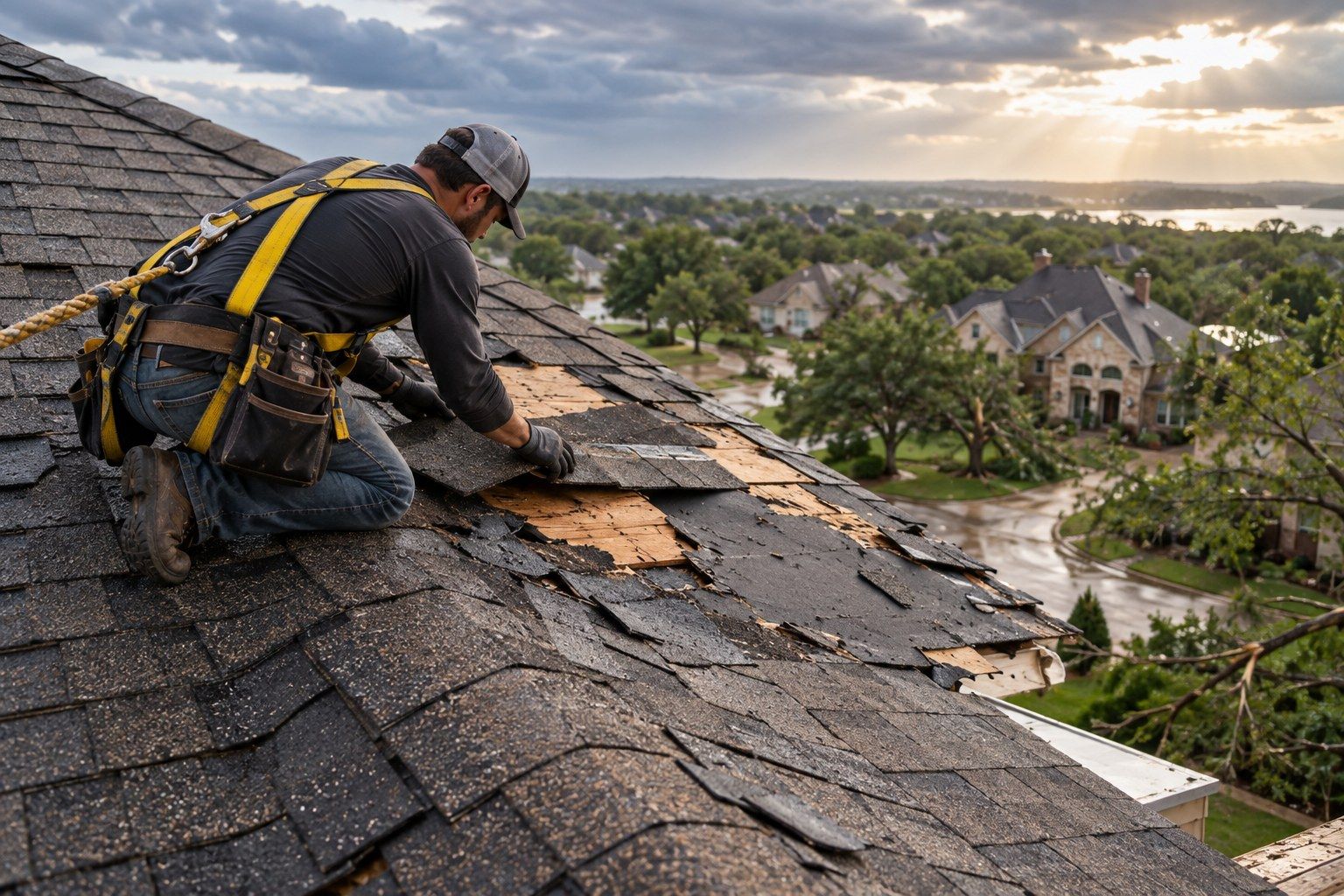
Whatever the covering, the metal components are the ones the marine atmosphere reaches first.
Common and the most vulnerable, because every fastener head sits in the salt stream and every hole breaks the coating.
Fewer exposed fixings, which helps considerably, but terminations, closures and cut edges still need marine-grade attention.
On commercial and port-related buildings. The membrane resists salt well; the metal edge, coping and fixings holding it down do not.
Residential stock, where the vulnerable parts are the metal components: drip edge, valley metal, vent flashing and fasteners.
Port Isabel is in Cameron County at the southern end of the Texas coast, served by ZIP code 78578, with area code 956. State Highway 100 runs into the city and ends at the Queen Isabella Causeway, which crosses the Laguna Madre to South Padre Island as Park Road 100. The city lies about sixteen miles north-east of Brownsville and was incorporated in 1928.
State Highway 100 runs roughly twenty-four miles from its western terminus at Interstate 69E and US 77/83, turning south-east to run along the coast of the Laguna Madre before reaching the causeway.
State Highway 48 provides the other main route, connecting toward Brownsville and the ship channel.
The city sits at the entrance to the Laguna Madre with the Gulf beyond South Padre Island. During the 1960s a large share of the state’s shrimp production came from the Port Isabel vicinity, and it remains a working port.
Hurricane Beulah destroyed a good portion of the city in September 1967. The current Queen Isabella Causeway, opened in 1974, replaced the original 1954 structure, which became the Old Fishing Pier.
The Port Isabel Lighthouse State Historic Site stands on East Queen Isabella Boulevard at the mainland end of the causeway and is among the most recognisable structures on the Texas coast.
The Port Isabel Historical Museum and the Laguna Madre waterfront are the other principal local reference points.
Proximity to open salt water is the dominant variable here, and it changes by street rather than by city. A property a few hundred yards closer to the water is in a measurably harsher environment than its neighbour.
The most locally relevant service, since metal components are what the marine atmosphere attacks first. How metal roof leak repair works.
For corroded flashings, edge metal and their fixings, which fail here well before the roof covering does. How flashing repair works.
For tropical weather, where corrosion-weakened fixings reduce the uplift resistance the roof was built with. How storm damage repair works.
Worth doing on a regular interval here, because corrosion progresses continuously rather than waiting for an event. How roof leak inspection works.
Because the air carries salt. Wind coming off the Laguna Madre and the Gulf deposits a fine salt film on every exposed surface, and salt holds moisture and dramatically accelerates the corrosion of steel. A fastener or flashing that would last decades inland can be visibly deteriorating in a fraction of that time a few hundred yards from the water.
It matters more here than almost anywhere. Dissimilar metals in contact in the presence of salt-laden moisture corrode faster than either would alone, so the combination of fastener, flashing and panel needs to be considered as a set rather than chosen independently. Coating specification and cut-edge protection also carry far more weight in a marine environment than inland.
More often than an inland one, because the deterioration is continuous rather than event-driven. Corrosion does not wait for a storm; it progresses every day the wind blows off the water. Regular checks of fasteners, flashings and any exposed cut edges catch it while it is still a maintenance item.
Surface deposits can be washed off, and that is worth doing on exposed metal where practical. What cannot be undone is material already lost to corrosion. Once a fastener shank is substantially reduced or a coating has been breached and the steel beneath is pitting, the component needs replacing rather than cleaning.
Cameron County is one of the fourteen first-tier coastal counties designated by the Texas Department of Insurance, and the coastal band is divided into wind zones with the Seaward zone carrying the highest wind speed requirement. What applies to a specific address, and what certification any work needs, should be confirmed with TDI before work is specified.
Yes. Hurricane Beulah destroyed a good part of the city in September 1967, and the exposure that made that possible has not changed. A location at the entrance to the Laguna Madre with a causeway to a barrier island is about as exposed as the Texas coast gets.
Roof leak service covers Cameron County and the wider Rio Grande Valley.
Cameron County, about sixteen miles south-west.
Cameron County, north-west along State Highway 100 and US 77.
Cameron County, west of Port Isabel.
Nueces County, north along the Texas coast.
For a coastal property, it helps to know roughly how far you are from open water and how old the metal components on the roof are.
Call Now · (844) 625-7943